Visual Identity in Morocco: How to Build a Brand System That Works
This is one of the most common and expensive mistakes in early-stage branding. Here's what a real visual identity includes, what to watch out for, and how to commission one that actually holds up.
What visual identity actually means
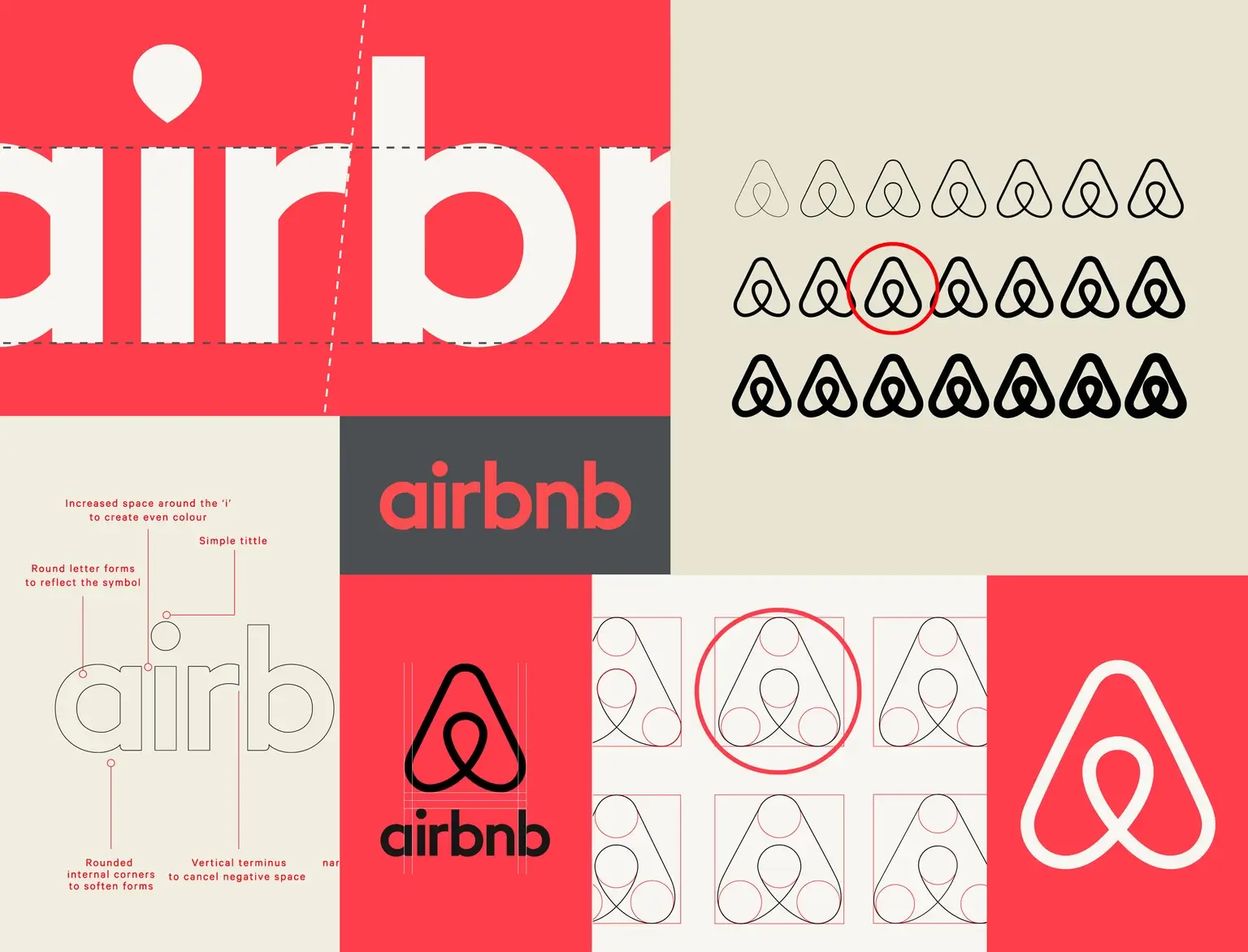
A visual identity is not a deliverable. It's a recognition system.
Your customers don't encounter your logo. They encounter your Instagram, your business card, your storefront, your pitch deck, and your packaging — in different moments, different contexts. The question is whether they recognize the same brand each time.
If the answer is not sure, you have a logo. You don't have an identity.
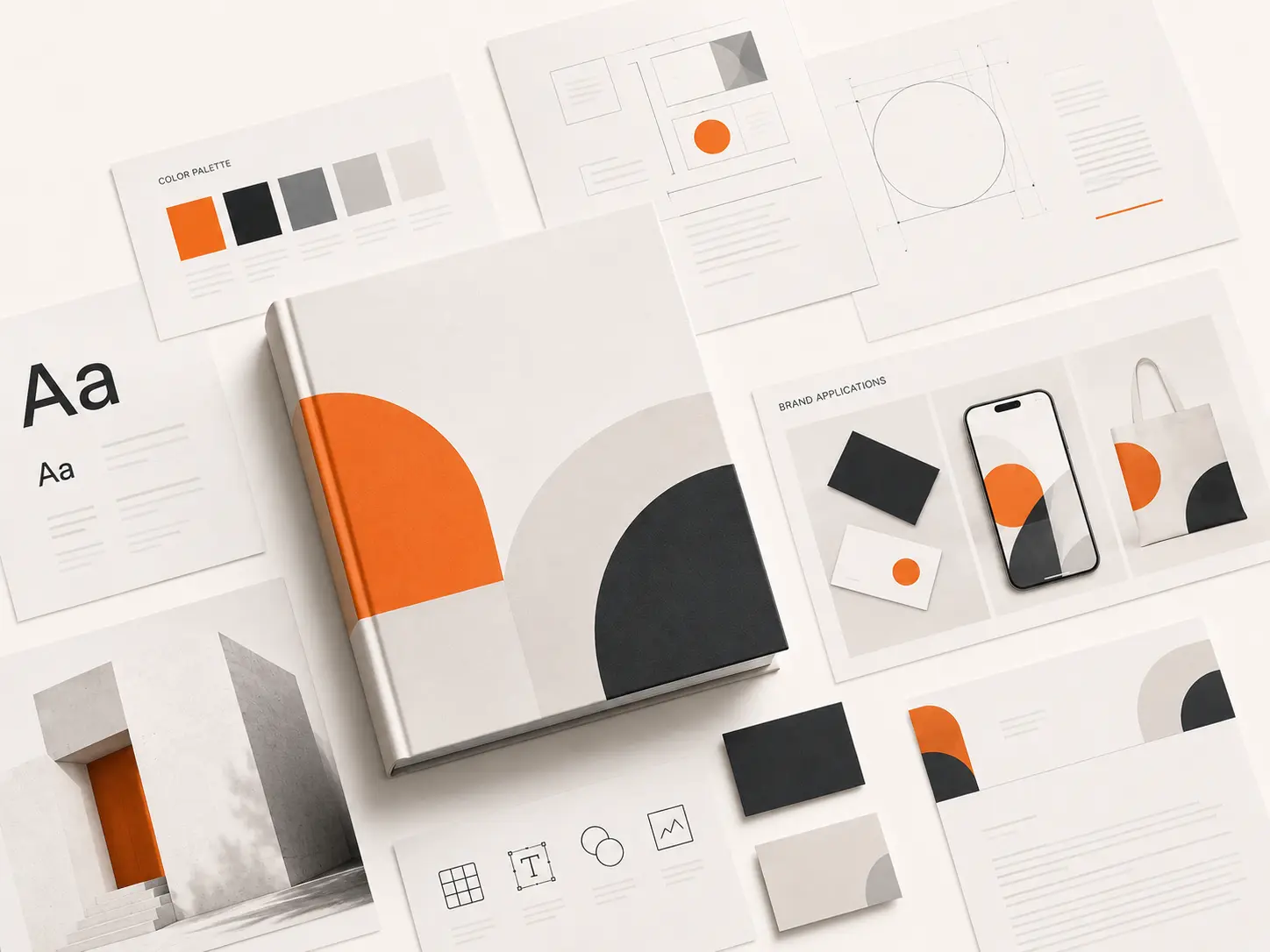
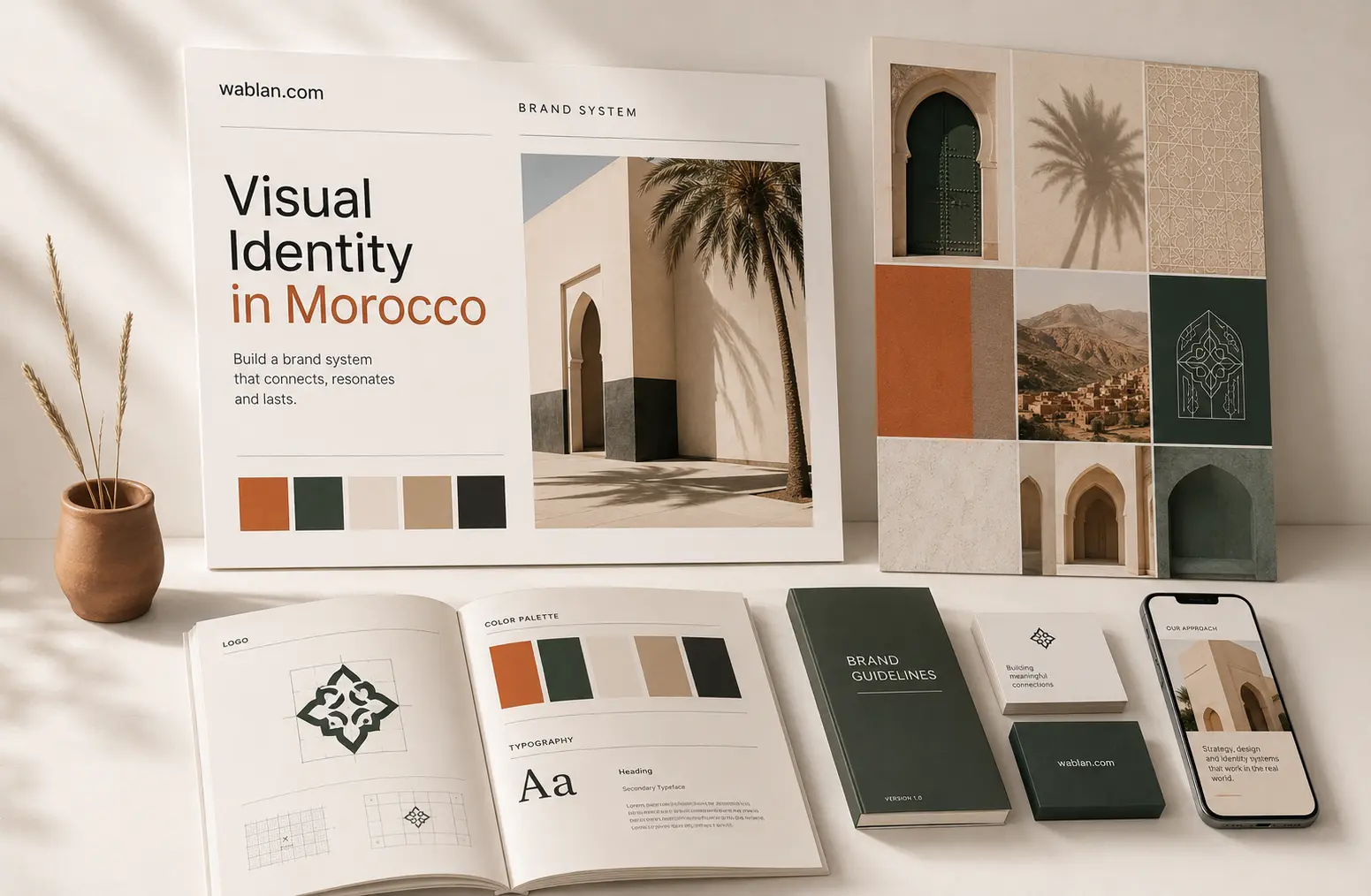
A proper visual identity includes:
- A logo system — all versions, not just one file
- A color palette — with exact values across formats
- A typographic system — headings, body, pairing rules
- Layout and composition guidelines
- Visual style — photography, icons, illustration direction
- Operational templates for recurring use cases
All of these working together create a visual language. One your brand speaks consistently, without supervision.
Why it matters for businesses in Morocco specifically
Morocco's business landscape is competitive — and visually noisy. Many sectors still have a low bar for brand design. Which means a solid identity creates an immediate, visible gap between you and most competitors.
- A dental clinic in Casablanca with consistent branding across signage, reception materials, and Instagram doesn't just look professional. It signals that it's worth paying more for. The design doesn't create that perception alone — but inconsistency actively destroys it.
- A SaaS startup in Rabat pitching to international investors needs slides, a website, and a brand presence that can hold up visually next to European or American peers. In that context, it's just a logo doesn't hold up. Investors pattern-match maturity, and design is part of that signal.
For B2C brands operating across French and Arabic markets, consistency across both language versions is a specific challenge most studios handle poorly. If your brand looks coherent in French but chaotic in Arabic, you have a half-finished identity.
The Moroccan market window
Here's something worth understanding about Morocco's current market context: the design bar in most sectors is still relatively low. That's not an insult — it's an opportunity. A business in Casablanca that invests in a clean, coherent visual identity right now will visually outperform most competitors in its category without an outsized budget. That window won't last as the market matures. The businesses that lock in strong brand positioning now will be harder to displace in three years.
This is why we consistently advise founders not to defer visual identity work until they feel ready — because by then, competitors who didn't wait will have already claimed the premium positioning in the customer's mind.
What poor visual identity actually costs
The cost isn't always visible immediately. It accumulates as:
- Inconsistent social media — different style every week depending on who posts
- Team members improvising fonts and colors on every new asset
- Customers who can't recognize your brand across touchpoints
- Rebuilding assets from scratch for every new need
- A full rebrand 18 months in — costing significantly more than doing it right the first time
What a professional visual identity should include
Logo system
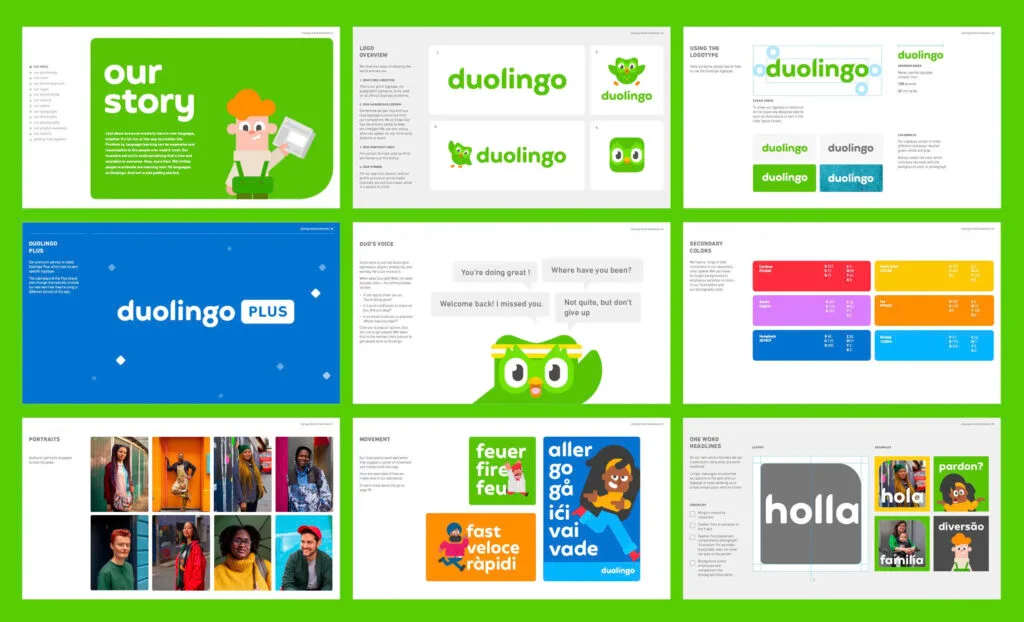
Your logo needs to exist in multiple configurations to be usable in the real world:
- Primary logo — full version, horizontal or vertical depending on your brand
- Secondary logo — compact alternative for constrained formats
- Icon or monogram — minimal version for avatars, favicons, small-scale applications
- Monochrome versions — black and white for official documents and single-color printing
If you receive a single PNG file, that's not a professional logo delivery. Request vector formats (.ai, .svg, .eps) and all variations from day one.
Color palette

Brand colors need exact values — not dark blue or warm orange:
- HEX values for digital use
- CMYK values for print
- RGB values for screen presentations
- Pantone references if you're doing quality packaging or print
For most brands: one to two primary colors, two to three secondary colors. Enough to create variety without losing coherence.
Typography

Typography determines whether your brand feels premium, approachable, or amateurish — and it's the most overlooked component in Moroccan branding projects.
A solid typographic system includes:
- A headline typeface with clear character and personality
- A body typeface that's readable and neutral
- Size and spacing hierarchy rules
- If you operate in French and Arabic: a tested bilingual pairing
The Latin/Arabic bilingual pairing is one of the most underserved areas in Moroccan branding. Many studios skip it entirely or handle it carelessly. If your market requires both scripts, verify this explicitly before approving final deliverables.
Layout rules
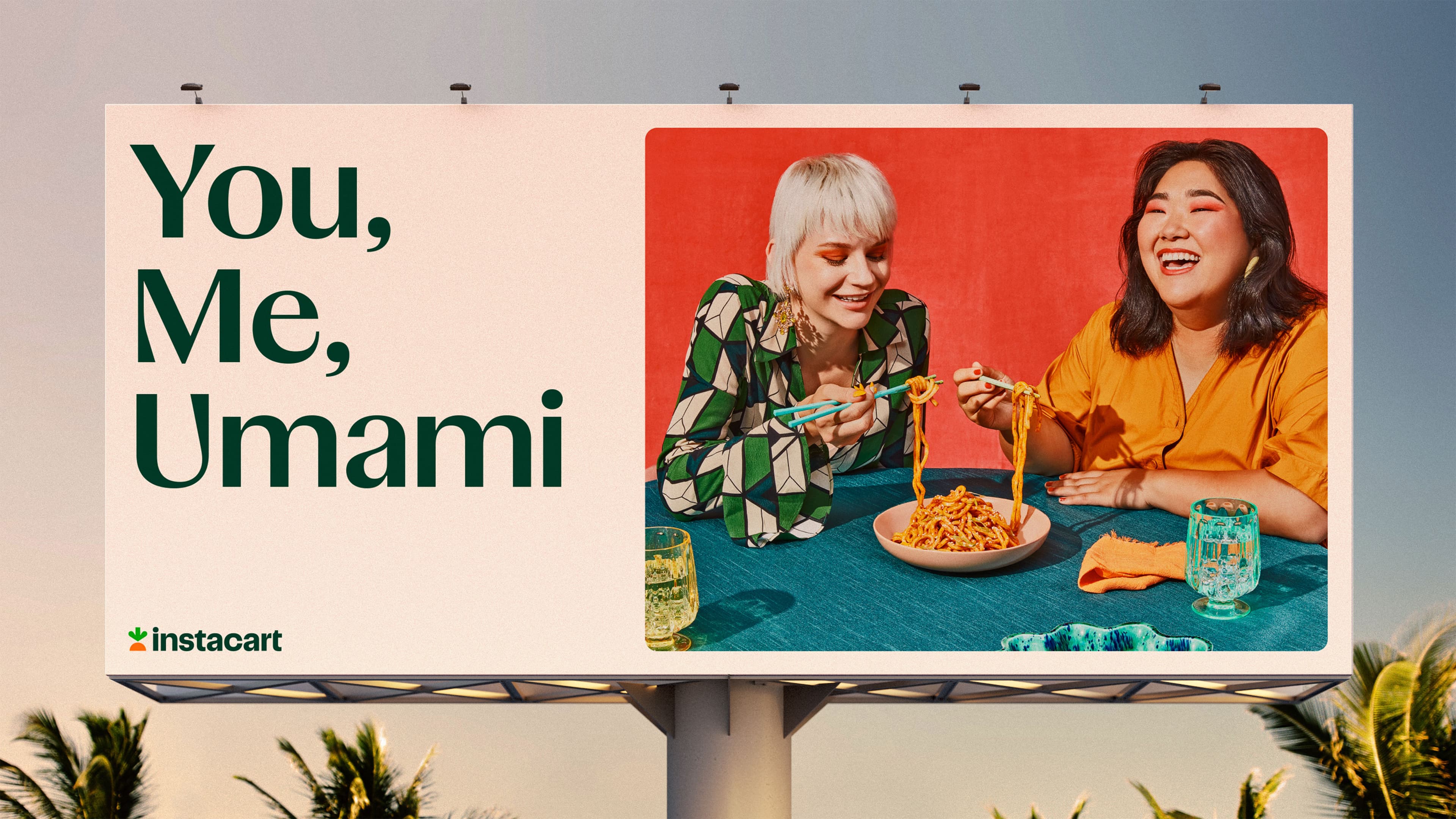
Margins, grids, spacing ratios, composition principles. These rules allow your team to produce consistent assets independently, without consulting the designer each time. Without them, every new asset becomes its own improvisation.
Visual style
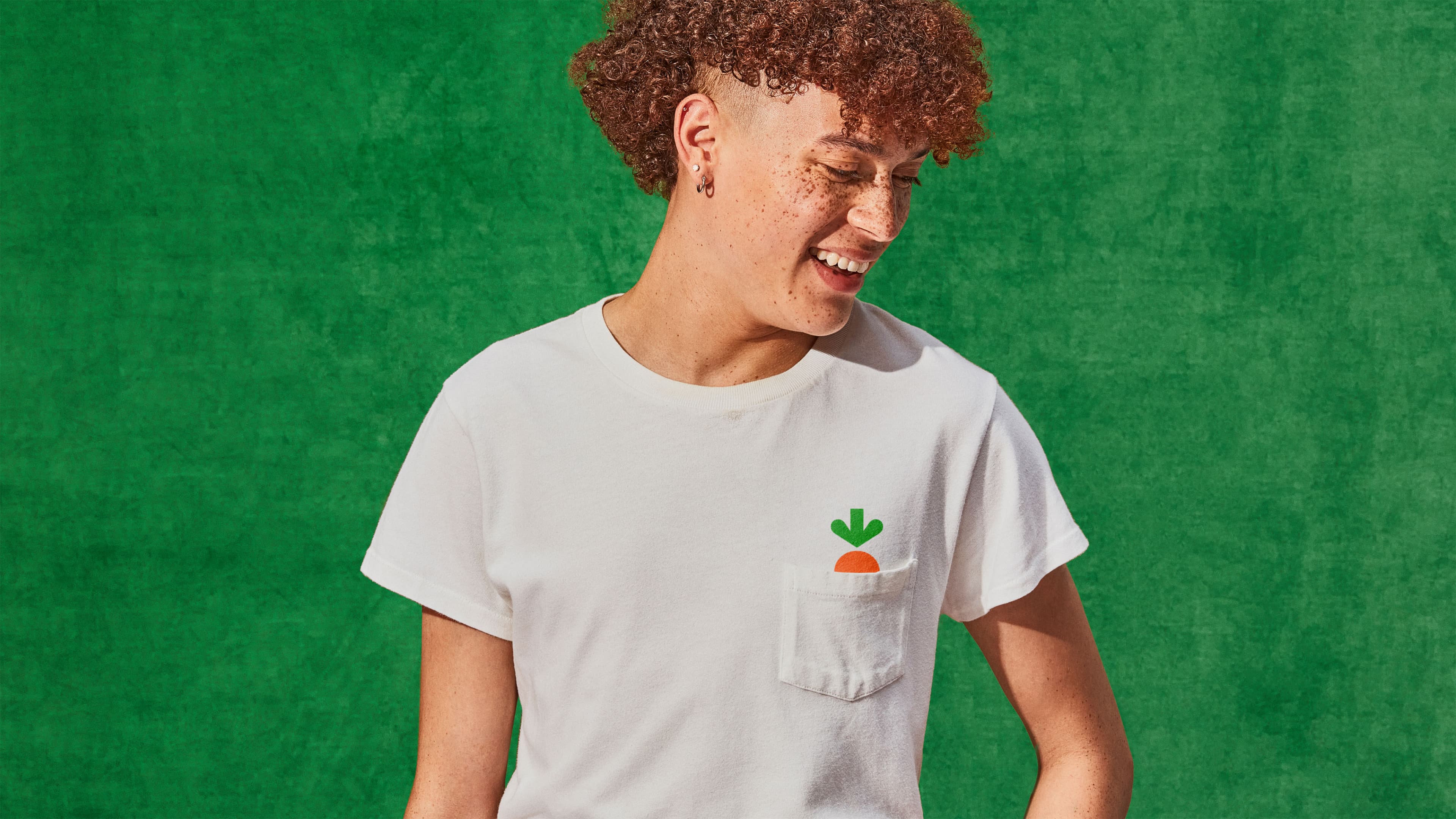
What kind of photography represents your brand? What filter direction? What icon style — flat, outline, filled? These decisions, once documented, turn your brand into something a team can apply — not just something a designer created once and no one knows how to replicate.
Operational templates

The most often missing piece. A beautiful identity system without practical templates gets ignored within months. Every team needs:
- Social media templates — posts and stories
- Email signature
- Presentation template (PowerPoint or Google Slides)
- Letterhead and official documents
- Business card in vector format
For startups and growing businesses managing their own communications, templates are often the most used part of the entire identity project. They're what make the brand hold up over time.
What good looks like — and what doesn't
A consistent identity doesn't mean boring. A restaurant in Marrakech with a strong typographic identity, homogeneous food photography, and well-built packaging creates organic content for itself — customers post because the aesthetic is worth sharing. That's not a marketing budget. That's a system doing its job.
Compare that to a startup in Casablanca that launched with a Canva logo and improvised the rest: six months later, five different color combinations on the website, pitch deck, and social media. The investor asked for a rebrand before continuing the conversation. It would have cost a fraction of that if done properly from the start.
Visual identity vs brand identity: the distinction that matters
Visual identity is the graphic dimension of your brand — what people see. Brand identity is broader: it includes your name, positioning, tone of voice, and values, of which the visual identity is the visual translation.
In practice: a restaurant in Marrakech can have beautiful typography and inconsistent service. Visual identity doesn't fix a weak positioning — it amplifies what's already there. The strongest identities are built after strategic clarity, not before. If you don't know who you're for, no designer can make that decision for you through color choices.
For Moroccan startups, the right question isn't do we need a visual identity — it's at what point is our current identity limiting our growth? There's a difference between launching with a provisional logo and planning to revisit it in 12 months, versus running a business on improvised visuals for three years and wondering why the brand doesn't convert.
When to invest in visual identity in Morocco
The investment is clearly justified at these moments:
- Before a serious launch with a communications budget — a coherent identity multiplies the return on every dirham you spend on ads, content, and PR.
- Before fundraising or a significant B2B partnership — your deck and your website make the first impression before any meeting. Make them count.
- When your positioning has changed — new market, new audience tier, new pricing strategy. If your identity still reflects the old version of your business, it will undermine your new positioning.
- When your team can't consistently apply your brand — this is the most common early symptom of an under-documented identity. It compounds over time.
The most common visual identity mistakes in Morocco
Buying a logo, not a system
The logo is one piece. Commissioning a logo without the surrounding system means your team will improvise everything else — colors, fonts, compositions, templates. Improvisation leads to inconsistency, which leads to a rebrand sooner than expected.
Starting with visuals, not strategy
Your visual identity translates something. If you haven't defined who you're for, what you stand for, and how you're different, no designer can do that work for you. The output will resemble your competitors because it has no reason not to.
Evaluating by portfolio aesthetics alone
A great-looking portfolio proves the studio can design. It doesn't prove the studio can think. Ask to see complete brand systems, brand guidelines documents, and operational templates — not just Behance mockups. Our guide on what a professional brand guidelines document should contain gives you a concrete checklist to evaluate any studio's deliverables before you sign.
Skipping the bilingual constraint
Most professional Moroccan businesses operate across French and Arabic. An identity that works well in Latin script but falls apart in Arabic is an unfinished identity — and it's immediately visible to anyone who sees both versions.
Accepting delivery without documentation
An identity without a usage guide will be used inconsistently within months. Even a two-page document is enough to anchor the essentials. If your studio doesn't provide one, ask explicitly. If the answer is no, that's a red flag.
How to commission a visual identity in Morocco: the approach that works
- 1. Clarify positioning before briefing — Know your target, your market, your differentiators. A designer without this information can only produce something beautiful. Not something strategic.
- 2. Choose a studio that asks questions — Any studio that goes straight to color preferences is skipping the strategy work. Look for studios that ask about your sector, competitors, customer journey, and primary touchpoints.
- 3. Validate deliverables before signing — Vector logo in all versions, color values in all formats, typography with licenses, usage guide, operational templates. Every item should be listed in the quote.
- 4. Test in real context before final approval — Apply the identity to your main touchpoints before signing off. Mockups hide real-world usability issues. Print the business card. Build the Instagram post. See how it actually works.
- 5. Ensure team adoption — Delivery is not the end of the project. Training your team to use the templates correctly is what makes the identity last.
For honest pricing benchmarks, read our Morocco branding and logo pricing guide. If you're evaluating agencies, our article on visual identity agencies in Morocco provides concrete selection criteria.
One last point worth making explicit: the cheapest option is rarely cheap. A poorly scoped visual identity project produces a logo that needs to be replaced in 18 months, at which point you're also replacing every asset that was built on top of it. The math on getting it right the first time almost always wins.
Frequently asked questions — Visual identity in Morocco
What's the difference between a logo and a visual identity?
A logo is a single mark — one graphic element. A visual identity is the complete system: logo, colors, typography, layout rules, visual style guidelines, and templates. The logo without the system is a starting point. The system is what makes it work consistently across every brand touchpoint.
How much does a visual identity cost in Morocco?
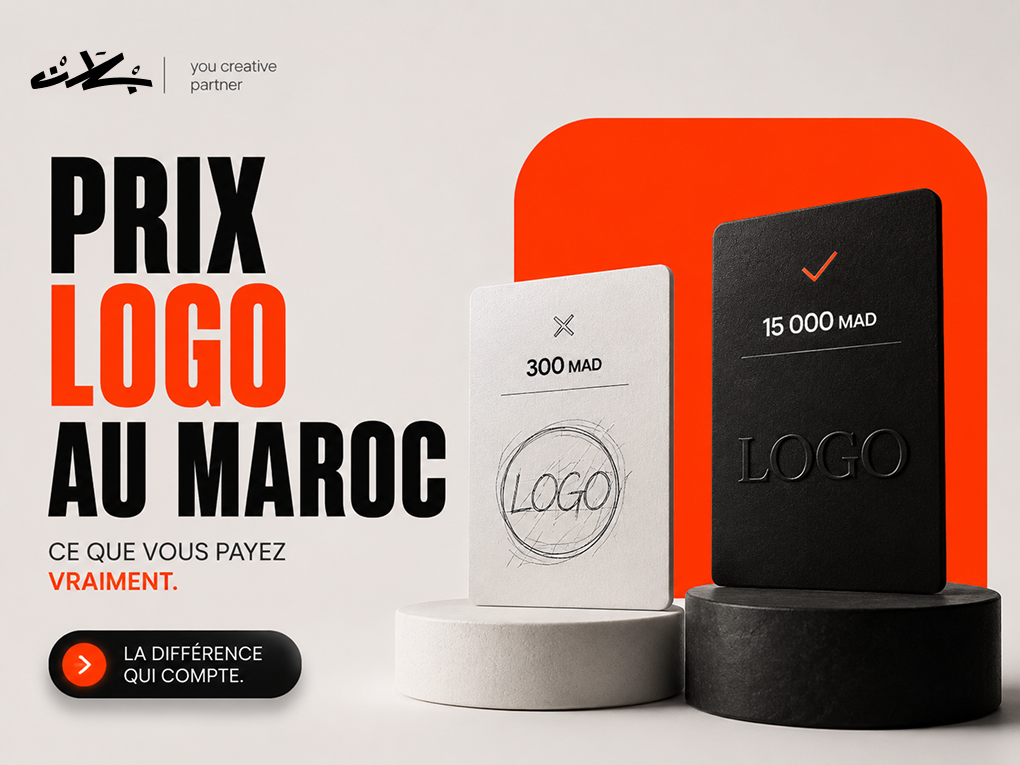
A basic project — logo, palette, typography, minimal guide — typically ranges from 4,000 to 10,000 MAD. A complete project with operational templates, full brand guidelines, and launch assets starts around 15,000 MAD and scales up with complexity. For detailed benchmarks, see our Morocco branding pricing guide.
Do I need a visual identity from day one?
Ideally, yes. If you launch with a placeholder logo, plan a proper identity within the first 6 to 12 months — before you've produced hundreds of assets that all need to be redone. Rebuilding after the fact always costs more than doing it right from the start.
What format should I receive my logo in?
Vector formats: .ai (Adobe Illustrator), .svg, .eps. These are scalable and editable. PNG files are secondary exports for web use — they should never be your only deliverable. Ask for all logo versions in vector from day one, and verify you can actually open and edit the files you receive.
How long does a proper visual identity project take?
Between 3 and 8 weeks for a complete project. Anything under 2 weeks for a complete identity is likely a template with your name on it. A real system requires strategy, iteration, real-context testing, and proper documentation.
Build a brand system that works across every touchpoint
If you're creating or rebuilding your brand identity in Morocco — startup, growing business, or brand that's outgrown its current look — the first step isn't choosing colors. It's getting clear on what your brand needs to communicate, and who it's talking to.
Blan works with founders who need a system, not just a file. We start with the strategic questions and end with tools your team can actually use day to day.
Tell us about your sector and where you are in the process. We'll respond with a direction and an honest estimate.
Start the conversation — or see how we work and what it costs.
Need help building this?
Contact us →